
Everyone has Verity wrong

Spoiler alert for the book: “Verity” by Collen Hoover
You’ve been warned.
Still here?
You sure?
Ok then.
Here you go.
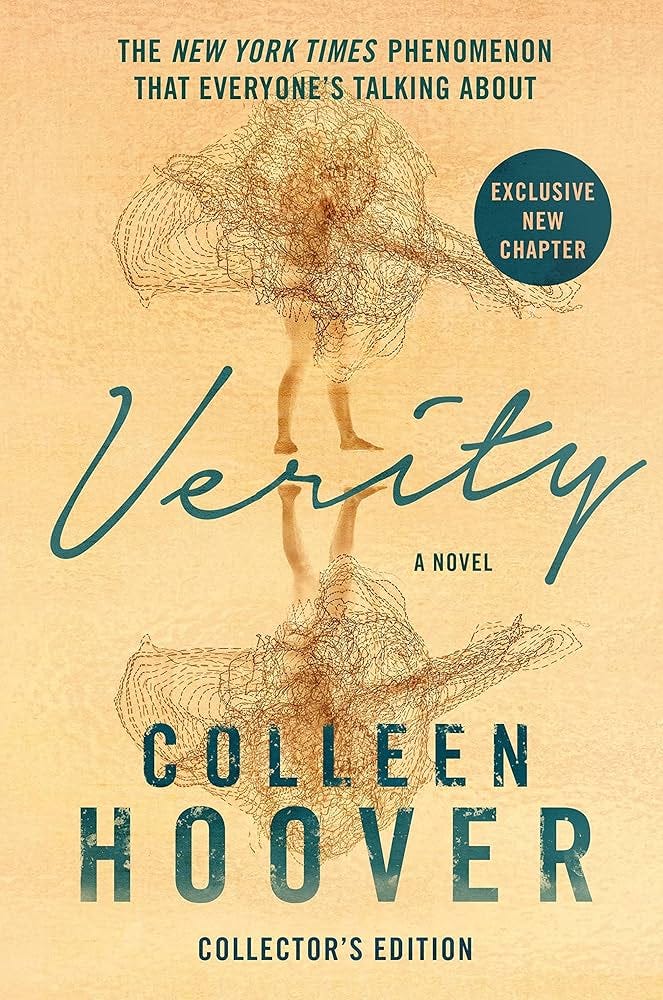
Why Everyone Gets Verity Wrong
At the end of the book, we find Verity has an autobiographical manuscript & letter. Both are contradicting each other. So, we’re left to wonder, which one is right?
To me, both the manuscript and the letter are real.
Not real as in "they both tell the truth." Real as in Verity wrote both documents with full intention and a specific purpose. The documents are real, but service different purposes.
The manuscript is her confession. It’s real, raw, and brutal to get through. Something no one should read. Like a Journal entry.
The letter is an afterthought. A lie calculated in the changing situation she was in. Written specifically to save her ass and throw Jeremy under the bus.
Everyone treats this like an either/or problem. It's not. Both can be true but in different ways.
It's a both/and situation that shows us how smart people operate under pressure.
Get uncomfortable truths about how stories control us
Verity isn't asking you to choose between two versions of truth.
She's showing you how a professional storyteller uses narrative as a weapon system.
The manuscript was never meant for public consumption. Lowen found it by snooping around Jeremy's office. When Verity realized it had been discovered, when she noticed it wasn't where she left it, she didn't panic.
She adapted and used the time when no one was in the house or close by to find it.
Like any writer who realizes their plot has taken an unexpected turn.
The letter is a revision. A new draft for a story that went off-script.
A good writer isn't someone with God-like omniscience. It's someone who can adapt as the story unfolds in front of them.
Writers Are Professional Planners
Everyone thinks Verity is an unhinged mother who snapped.
Nah that’s not it.
She’s a writer, and writers, especially fiction writers, are freakishly good at planning and adapting to situations.
Writers tell stories sure, but they also have to build words.
When I write nonfiction, the dots exist, I just have to connect them. But when I write fiction, I have to create the dots and connect them in a way that makes sense to my readers while being a compelling story to read.
Fiction writers craft personas and manipulate emotions for a living. The job is to anticipate emotions to the best of our ability and manipulate them.
Why wouldn't Verity use those skills when her actual survival depends on it?
The manuscript is a confession written by someone who knows the power of documented truth. It’s a manipulation.
The letter is a reframe written by someone who understands narrative control.
She went full-blown Christian Bale in The Machinist, method acting her way through a performance where one wrong move meant death.
And that makes her infinitely more dangerous than any hair-twirling villain.
But here’s the crazy part, Verity loses at the end.
So that means her plan was bad or she was an idiot? Right?
Nah, that’s also bullshit.
That's like saying stopping at a red light is bad strategy because someone rear-ends you.
The quality of a decision isn't determined by its outcome; it's determined by the information available when the decision was made.
In Verity’s situation, she had the following:
Limited mobility (faking paralysis to stay alive)
Fragmented intel (conversations with Crew, observing behavioral changes)
Hostile variables (Jeremy's growing obsession with Lowen)
Zero allies (unless you count Crew)
Given those constraints, writing a counter-narrative makes sense. The letter gives her plausible deniability if discovered alive, posthumous reputation management if killed.
The issue was that she couldn't predict Jeremy would be to be so balls deep in Lowen and choose murder over conversation. She couldn't predict Lowen would become so identity-absorbed that she'd kill to protect her new reality.
That's not strategic failure. That's encountering uncontrollable variables that no reasonable person could anticipate.
Good planning never guarantees survival, it just gives us the best odds available.
Even brilliant people lose when they're outmaneuvered by variables they couldn't predict.
The 3 Liars: Everyone Is Weaponizing Stories
The book isn’t asking the reader to wonder "Who's telling the truth”, but instead forcing you to question "Who's controlling the narrative?"
Because all three main characters are shady as fuck.
Everyone is a pathological storyteller.
Jeremy: The Silent Storyteller
Never defends himself. Never explains his version. Dude gives the bad answers at times. He controls the story through silence and selective revelation. His line "If you read that manuscript, you'll understand" isn't sharing information, it's scripting Lowen's emotional response.
Verity: The Story Samurai
Wields the pen the Miyamoto Musashi wielded the sword. Psychological warfare. Documents everything because she knows that written words carry more weight than spoken ones. Adapts her narrative strategy when circumstances change. Even her paralysis is performance art. Every word is a manipulation.
Lowen: The Story Thief
Absorbs other people's identities like a credit card scammer. She reads the manuscript and doesn't report a potential child murder but instead obsesses over the husband. She basically becomes Verity 2.0:
Moves into Verity's house
Wears Verity's clothes
Uses Verity's toothbrush
Sleeps with Verity's husband
Essentially becomes Verity 2.0
She never discovers the truth, but she doesn’t care. She doesn’t want to be herself, so she picks up the identity of someone better.
Lowen selects the narrative that lets her keep what she's stolen.
And we’re told the story through her eyes, so the lens is already cracked.
The Will to Act vs. The Outcome
Verity screams when Jeremy chokes her. She acts. She fights back.
But the letter stays hidden in the floorboard. Why not mail it? Why not leave it somewhere more obvious?
Because she was still adapting. Still revising. She thought she had more time.
The will to act is about taking action.
Verity moved. She planned. She adapted. Was she successful? Nope. Because she didn't expect Jeremy to be beyond reason or Lowen to be beyond morality.
Think about tv show The Penguin.
Cobblepot doesn't have everything planned. He takes advantage of situations as they arise. That's not omniscience. That's adaptability under pressure.
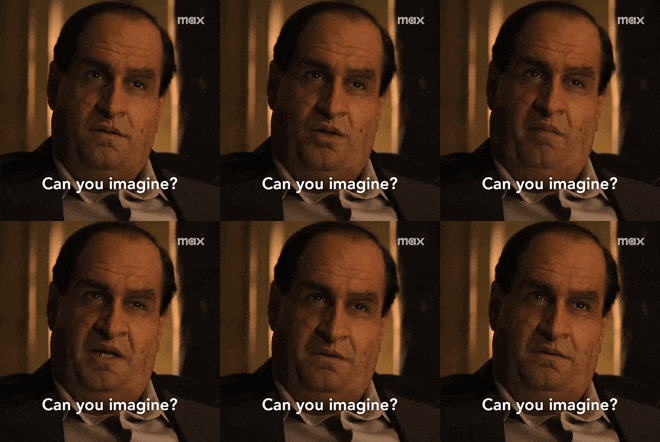
Verity played the same game. She just happened to be in a house with two other people willing to kill for their preferred fiction.
Verity is a masterclass in narrative warfare.
Every story is a weapon.
The manuscript and letter aren't contradictory. They're tactical weapons deployed by someone who understands that stories shape reality.
Verity lost the war, but not due to strategy, but because she underestimated how completely Jeremy had rewritten Lowen's sense of self.
She planned for rational actors. She got identity-absorbing ghosts willing to kill to protect their preferred fiction. She didn’t imagine someone else to be as crazy (or crazier) than her.
In psychological warfare, the best story doesn't always win. Sometimes the most desperate person does.
And that's the real horror of Verity.
In a house full of storytellers, full of liars, the winner isn't the best writer.
It's the one most willing to make their story real.
One someone is willing to die for.
Or kill for.