
3 Tips for Conquering Resumes, Networking, Interviews
It's the time of year for Job Applications


Engineering is a catch-22.
To get experience, first you need it too.
So how do you do it?
This Issue at a Glance:
Formatting Tips for your Resume (even if you have little experience)!
Networking & writing Cold Emails to reach professionals!
3 ways to Nail the Interview!
3 Tips for Formatting your Resume:
Resumes for college students: single-sheets, 1 column, spaced, with 12 pt Times new Roman font. You can see my initial resume below.
Take a second & look at what makes it good & bad.
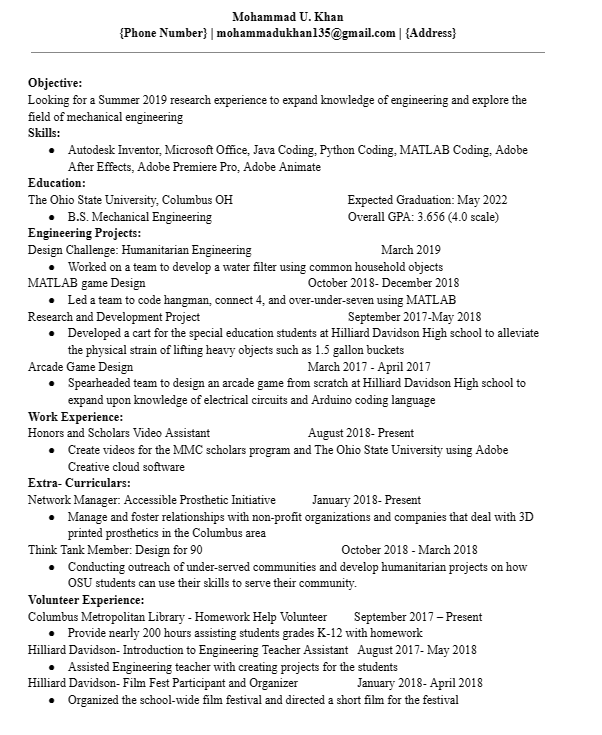
The Good:
It’s familiar to the ATS system.
Sectioned for easy reading.
It fills 1 page even though most of my experience is from School Projects
The Bad:
It’s familiar. Familiar means the interviewer has seen hundreds of resumes formatted the same way. Recruiters spend 8-15 seconds reading your resume. If it’s the same as hundreds of others, it’ll be even less.
Action words are weak. Words like “worked” or “led” convey the meaning but replace them with stronger words.
Hard to find details & results from the experience.
There’s no focus to the resume.
After rejections from +20 applications, I overhauled my resume. Found a template and redesigned. See the changed version below.
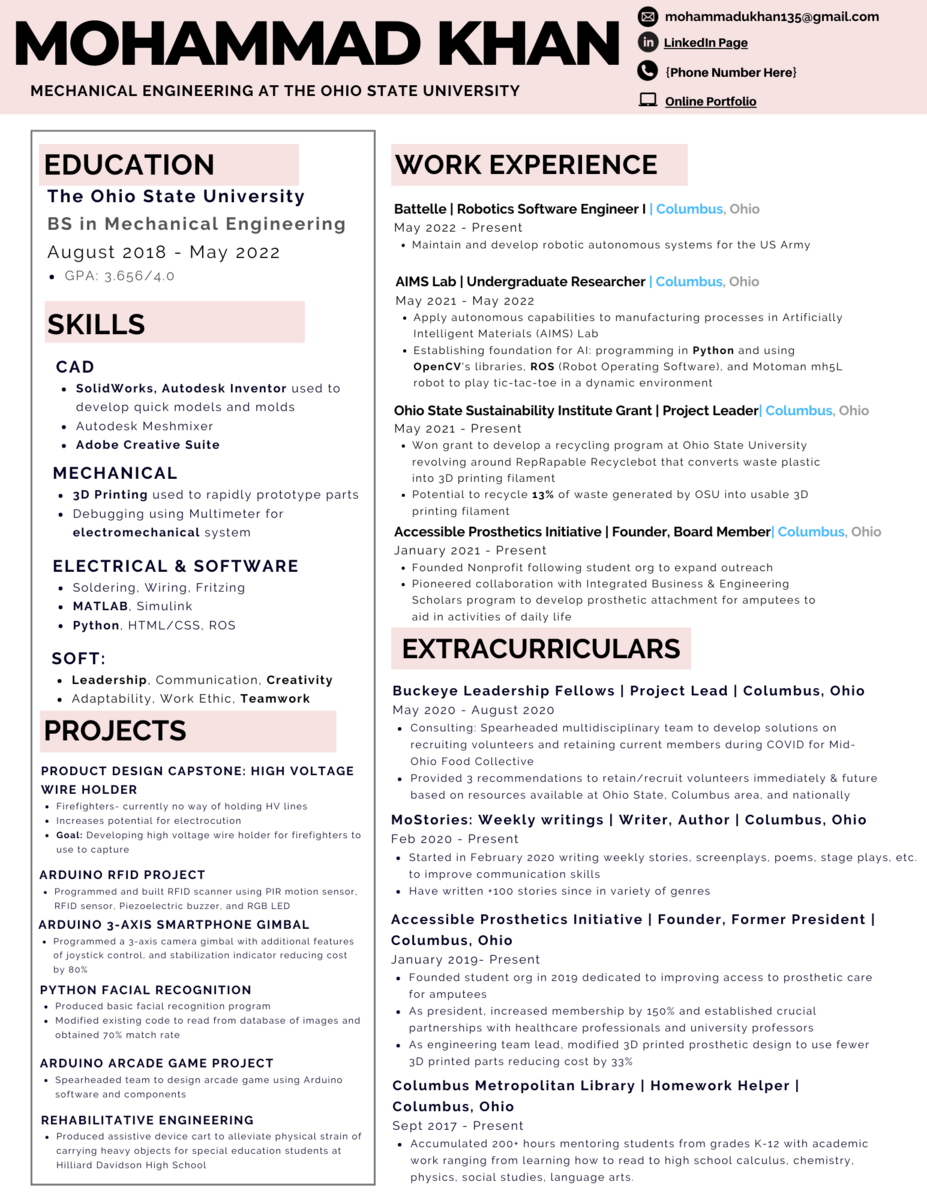
The Good:
Eye-catching design. Recruiters will pay more attention to it.
Bolded keywords & Results are clear.
Links to online portfolio & LinkedIn page (make sure to send resume as PDF for this to work)
The Bad:
Eye-catching design can hurt if it doesn’t pass ATS. Always check your resume with an ATS system (see below for specific tools I’ve used)
Cluttered with info. Can be overwhelming.
Could use White Space more for readability.
Here are the tools I used to build my resumes:
Canva: Graphic Design
ATS Resume Checker:
Job Scan: https://www.jobscan.co/
Cultivated Culture (Free): https://cultivatedculture.com/resume-scanner/
Check with your university for free access to ATS tools & other sessions to review your resume.
To Summarize—3 Tips to Format your Resume:
Bold the Keywords used in job descriptions.
Make your results clear.
Format for Readability.
What if you don't have much experience?
Highlight class projects and what you’ve learned from them in your resume.
Take the job/internship description & focus on the keywords. Find the projects which fit the keywords and expand those.
It’s important to show initiative even if your projects didn’t go well. Demonstrating you tried & failed > never trying at all.
Let’s talk Networking:
As university students, you have access to a network of professors who know other professors and industry professionals.
Leverage them.
Here’s 3 steps to emailing reaching out to professors:
Open with how you know them.
Explain why you’re reaching out to them.
Ask questions about their contacts in industry or their research.
Here are 6 steps to draft a cold email to a professional:
Pick a specific company with 1 project or idea.
Learn about the project.
Who works the project, their goals, the past,
Draft specific questions from your research.
List your questions in the email.
Structure your email around your questions.
Format your email for readability & skim-ability.
Repeat for each company/person.
If you’re interested in a deeper dive in Cold-emails —>: 6 steps to Writing the Perfect Cold-Email (beehiiv.com)
3 Steps for Nailing the Interview:
You're at the interview stage which means the company knows you can do the job well on paper, they want to know how well you’ll work with the team.
If you cannot work well with a team, you will get fired. No one wants to work with a smart person who's a jerk, no matter how much the movies make it look cool.
Step 1: Prepare Answers beforehand.
Your interviewer will ask about your projects, leadership experience, how you handle specific situations, and other basic questions to gauge your experience on paper with your resume.
Prepare concise examples to answer their questions.
Details show expertise even in failed projects.
Step 2: Don’t be afraid to make jokes or mistakes or highlight your failures.
People know you’re human and could be nervous. It’s ok if you slip and misspeak. Acknowledge the mistake and continue.
Highlighting failures shows self-awareness and willingness to improve. No one is perfect.
Step 3: Frame your Answers as Background - Details - Results
Similar to your resume, when you’re asked about projects or experience.
Any easy framework for the interviewer to follow.
Example:
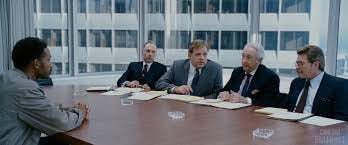
The Pursuit of Happyness is a great example of putting all these tips into action:
The Newsletter on What They Don't Teach You in Enginering School
next-level-engineer.beehiiv.com/p/pursuit-of-happyness-and-resumes
That’s it!
As always, thanks for reading.
Hit reply and let me know what you found most helpful this week—I’d love to hear from you!
See you next Saturday!
If you’d like, here’s how you can support me:
Share this newsletter with a friend: Next-Level Engineer
Follow me on LinkedIn: https://www.linkedin.com/in/mohammadkhan1859/
If you’re in college or thinking of switching careers, download my FREE Career Decision Matrix: https://mohammadkhan135.gumroad.com/l/decision_matrix
Feel free to request topics in the newsletter or on my LinkedIn posts.